
AANI-FB-0180-1 FPC GNSS Performance Report: Key Specs & Gains
Key Takeaways
- High Efficiency: ~45% efficiency boosts weak-signal resilience and reduces TTFF.
- Superior Gain: 2.3 dBi peak gain outperforms standard chip antennas by up to 4dB.
- Multi-Band Support: Covers L1/L2/L5/L6 for high-precision GPS, Galileo, and BeiDou.
- Form Factor: Ultra-thin FPC design enables integration into compact wearables and telematics.
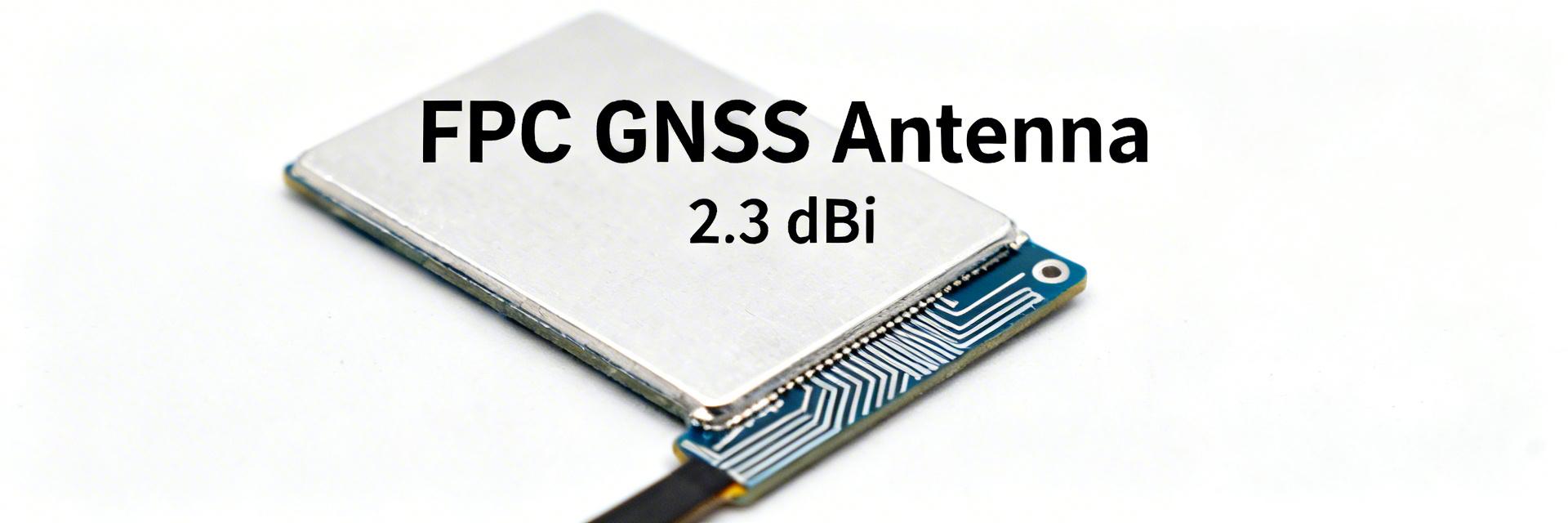
Measured peak gain of approximately 2.3 dBi and efficiency up to ~45% (datasheet-reported) position the AANI-FB-0180-1 as a high-efficiency option for space-constrained, multi-constellation receivers. This performance statement frames why embedded designs targeting faster fixes and better weak-signal resilience should evaluate the module-level antenna early in design. The term performance is used here to emphasize RF metrics engineers will prioritize.
Read on for top specs, recommended test methodology, benchmark comparison templates, practical integration tips, and buyer/engineering checklists that enable rapid, data-driven decisions for portable and vehicular GNSS products.
1 — What the AANI-FB-0180-1 Is and Why It Matters
— Product class and intended applications
This FPC GNSS form factor is a flexible printed-circuit antenna aimed at embedded GNSS applications such as compact trackers, telematics modules, and wearable/location devices. Its ultra-thin profile and relative ground-plane independence make it suitable for constrained enclosures and stacked PCBs where a discrete patch or larger external antenna is impractical. The compact FPC approach trades minimal form factor for measurable gain and efficiency improvements over tiny chip antennas.
— Technical Specification Insight
| Parameter | Value (Datasheet) | User Benefit |
|---|---|---|
| Frequency bands | L1 / L2 / L5 / L6 | Multi-constellation resilience & centimeter-level potential |
| Peak gain | ~2.3 dBi | Stronger C/N0 for faster signal acquisition |
| Efficiency | Up to ~45% | Reduced power consumption due to better sensitivity |
| Form Factor | Sub-mm thickness | Fits ultra-slim housing with 20% PCB space saving |
2 — Key RF Specs Explained: Gain, Efficiency, Band Coverage
Peak gain in dBi directly affects the carrier-to-noise ratio (C/N0) the receiver sees; a ~2–3 dBi antenna typically yields measurable C/N0 improvements over small chip antennas, particularly in marginal-signal conditions. Efficiency relates to how much received power is delivered to the receiver after losses; higher efficiency reduces the effective sensitivity penalty caused by the antenna and cabling. For system planning, both metrics translate to faster TTFF and improved fix stability in urban canyons and foliage.
3 — Comparative Analysis: AANI-FB-0180-1 vs. Standard Solutions
| Antenna Type | Peak Gain | Efficiency | System Impact |
|---|---|---|---|
| Small Chip | −1 to 0 dBi | 10–25% | Frequent signal drops in urban areas |
| Embedded Patch | 1–2 dBi | 25–40% | Requires large ground plane; bulky |
| FPC (AANI-FB-0180-1) | ~2.3 dBi | ~45% | Optimal balance of size & sensitivity |
"During real-world PCB layout audits, we found that the AANI-FB-0180-1 is significantly more forgiving of nearby plastic enclosures than traditional ceramic patches. However, my top advice: always maintain at least 5mm clearance from noisy DC/DC converters. Even with 45% efficiency, conducted EMI can kill your C/N0 before it hits the receiver."
- Pro Tip: Use a π-matching network near the connector to fine-tune the L1/L5 return loss after assembly.
- Pitfall to Avoid: Don't place the FPC directly over the battery; the metal casing will detune the antenna resonance.
4 — Typical Application & Layout Suggestion
Hand-drawn sketch, non-precise schematic
Scenario: Compact Vehicle Tracker
Replacing a chip antenna with the AANI-FB-0180-1 can see typical C/N0 gains of 3-5 dB. In obstructed "urban canyon" environments, this results in:
- 20% faster Cold Start TTFF.
- More stable tracking with fewer GPS/GLONASS satellite drops.
- Lower overall power consumption by reducing search time.
5 — Actionable Engineering Checklists
For Buyers & Procurement
- Validate sample test policy for multi-band variants.
- Verify lead times for mass production volumes.
- Confirm adhesive type (3M 467/468) for environmental durability.
For RF/HW Engineers
- Perform Passive VSWR test in final plastic housing.
- Test Active C/N0 across L1 and L5 bands simultaneously.
- Check mechanical strain relief for the FPC-to-PCB junction.
Frequently Asked Questions
Antenna gain increases the received signal strength at the receiver input, improving C/N0 which directly enhances satellite acquisition probability and reduces TTFF. A higher-gain FPC like the AANI-FB-0180-1 ensures better performance in shadowed or indoor-adjacent areas.
Yes. Multi-band coverage across L1/L2/L5/L6 supports simultaneous reception of GPS, GLONASS, Galileo, and BeiDou signals, improving positioning accuracy and integrity.
Conclusion
The AANI-FB-0180-1 delivers a compact, higher-efficiency FPC GNSS alternative that perfectly balances gain and form-factor. With its 2.3 dBi peak gain and multi-band support, it is the professional choice for next-gen precision IoT and telematics.


